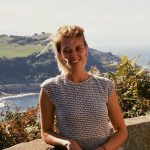
Sophie is a PhD student in the department Psychology of Language and the research group Language and Computation in Neural Systems at the MPI. She studies spoken language comprehension. She is intrigued by the way our brain infers hierarchical structure and meaning from sound sequences, and how knowledge of these structures and meanings affect our perception of the sound.
Before coming to Nijmegen, she studied general linguistics and Spanish philology in Utrecht, Valencia, and Reading. After her master’s in Utrecht she spent a year studying the cognitive neuroscience of language during a master's at the BCBL in San Sebastián.
Aside from thinking about all things language, Sophie loves to draw, spend a lot of time outside, move her body in sports like pole dancing, surfing, and bouldering, and cook comforting (vegetarian) dishes.
“Yes, I understand what you are saying,” responds the neural network ChatGPT. “I am a language model designed to understand human language and respond to natural language input. So I’m here to help if you have questions or need anything. What can I do for you?”
The streets of Nguekhokh, a small town in western Senegal, are filled with their own heartbeat: the beat of the Sabar drums. The musicians who play the Sabar and perform spoken word at parties and ceremonies say that ‘the drum speaks’. They don’t mean this figuratively. Sabar drumming has a grammar. So, is it music or a language?
In the misty mountains of the Canary island La Gomera (next to Tenerife) sounds the whistle of a particularly curious bird: humans. On this island, farmers have been communicating by whistling melodies to one another for as long as they can remember.
We use cookies to ensure that we give you the best experience on our website. If you continue to use this site we will assume that you are happy with it.