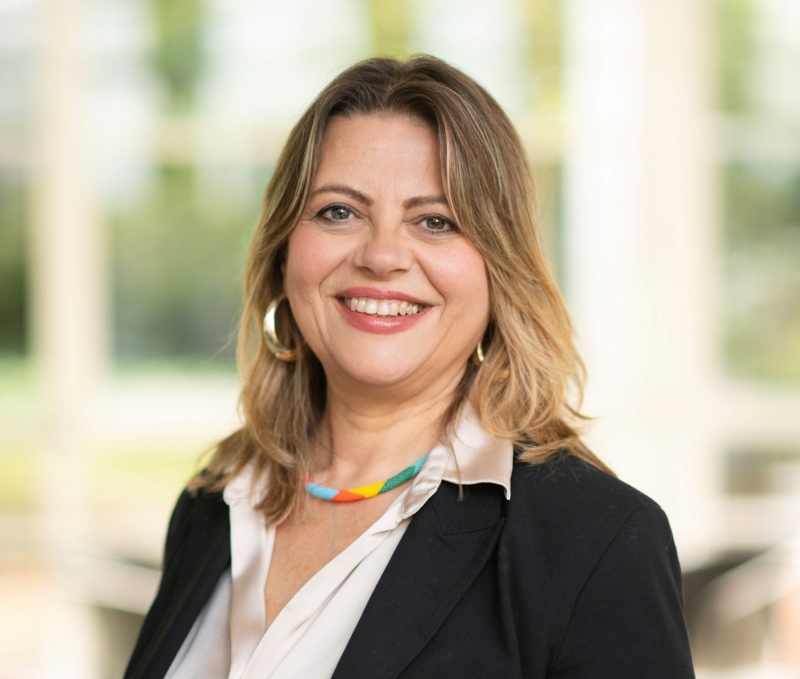
It was the 90s, and the Max Planck Institute for Psycholinguistics was still growing into its shoes when Aslı Özyürek, freshly graduated from the University of Chicago, was invited by her former colleague Sotaro Kita to apply to an exciting new project on gestures. Sotaro was setting up that project within the Language and Cognition Department (1998-2017), led by Steve Levinson.
The rest is history: Aslı got her first postdoc, and coincidentally, her first job at the Max Planck Institute for Psycholinguistics, where she is now a director.
She recalls that the hiring process back then was easier than it is now, but as postdoc positions usually are, this one, too, was a precarious one. She initially got a stipend for one year, and she had to interview again to be able to continue for another year. And then another year. Looking back at it, she contemplates that this might have been the biggest challenge during the postdoc: “What will happen next year?”
After three years like this, Aslı went back to Turkey to take up an Associate Professor position at Koç University. She took some time to publish some papers and write some grants, and then came back to Nijmegen as a grant holder. Around that time, the multimodal aspect of language had started gaining traction in Europe and Aslı’s career was soaring. But she will always recall her postdoc years at the MPI as “the most fun I’ve had in my career.”
“My peers were pioneers.”
About her relationship with her supervisor, she says: “Steve gave us a lot of freedom.” But that doesn’t mean that there was time for slacking off, because “everybody wanted to impress Steve.” “Always work with your peers,” she says, “My peers were pioneers.” She recalls people excitedly coming back from fieldwork with recordings of languages that had never been recorded before. They would all gather around the data in a meeting room, discussing it until late in the evenings. With her direct supervisor Sotaro Kita, she had a much more informal relationship: “He treated me as a peer, I could socialise with him.”
One of my questions for Aslı was: “What were your considerations for choosing where you did your postdoc?” Her answer pulled me down to earth: “It was the only offer. No one was interested in gesture at the time!” But sometimes asking the questions that no one else has asked is exactly the thing to do. Her passion for gesture led to a co-authored paper with Sotaro Kita and Ann Senghas, Children Creating Core Properties of Language: Evidence from an Emerging Sign Language in Nicaragua, which Aslı says was instrumental in the further success of her career, because it got published in Science. However, Ann, Sotaro and Aslı were not fixated on having a ‘blockbuster publication’, rather, they treated publishing like a challenge: “Let’s try to make it to a top journal!” Why not?
“Follow your heart, not the trends.”
A lot has changed from 1995 to 2025 in academia. Looking at her current postdocs, Aslı concludes that the life of a postdoc has become more stressful. People are forced to ask themselves: “What benefits my job?”, rather than asking: “What more can I learn?” when thinking about the next step of their career. While it might be hard to stay true to yourself in these trying times, Aslı’s advice is to follow your heart, not the trends. Having a postdoc position is the ideal opportunity to immerse yourself in knowledge and write your most creative and novel publications. Aslı tries to recreate the environment she knows and loves in her own department by stimulating her postdocs to think creatively with new technology. The motto always being: Let’s try it out, let’s see what happens.
“Max Planck Institutes are about pushing boundaries”
People can be scared to do something daring in uncertain times, but according to Aslı, pushing boundaries is what MPIs are all about. That is not a call to ignore tradition, but rather to add to it. “Some people in my department are really getting there,” she says with a smile.
However, there is a need for diverse minds too. According to Aslı, there are different types of postdocs. Some have big ideas and know exactly what they want to do and how, but also need to be steered into the right direction once in a little while. Others thrive on collaboration and sparring ideas with their peers; and yet others work best when they can hyperfocus on the methodological and technical aspects of the job. And we need all three in academia!
Ultimately, you don’t have full control over how your career will go; circumstances and opportunities play a huge role. This was true for Aslı as well: “I was lucky,” she recalls. Nevertheless, you can raise your chances of getting that dream job by following Aslı’s three top tips for academic success:
- Never go below your level. Always apply for a job that is one step more challenging than your current one.
- Find a supportive peer. Not someone who is the same as you, but someone who complements you and stimulates your creative thinking.
- Use your network to the fullest!
And who knows, maybe there’s a director’s seat waiting for you one day. It all starts with a postdoc.