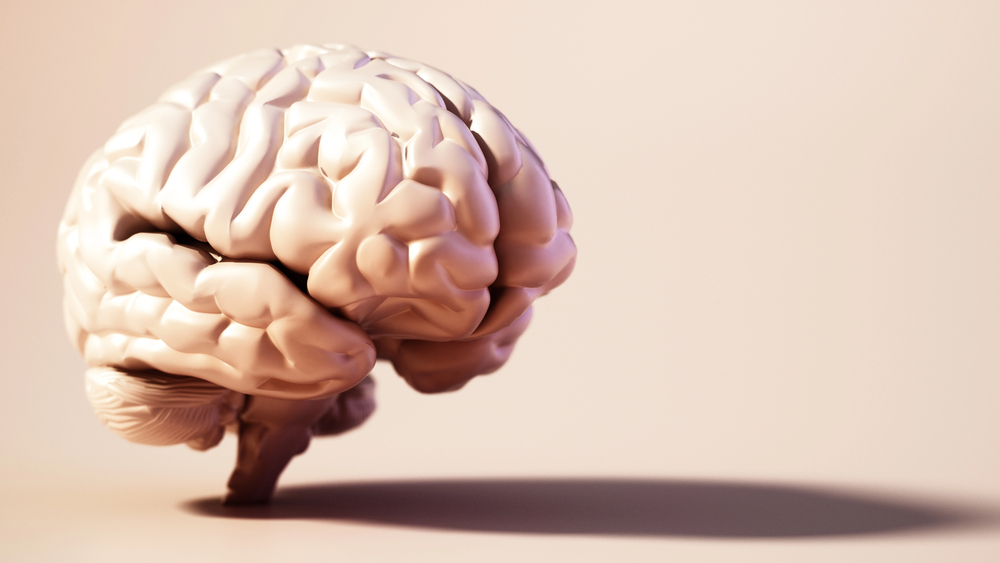
You might’ve heard that your brain finishes developing at 25—and after that, it’s all downhill. Luckily, that’s not true. While some parts of the brain do mature by your mid-twenties, your brain keeps learning and changing throughout your whole life.
In our previous blog in this series, we talked about how every brain is a little different—how even the “wiring” inside can vary from person to person. One big possible source of this difference is how the brain grows and reshapes itself over time.
In childhood, your brain builds tons of connections—more than it needs. Over time, it keeps the ones you use and lets go of the rest. This process creates special windows, called “sensitive periods,” when learning is easier. That’s one of the reasons why kids often pick up new skills, like music or languages, so quickly.
But the brain doesn’t freeze after childhood. Even as an adult or later in life, it can find new ways to solve problems. If one path isn’t working well, your brain takes a detour, basically, using different parts of the brain to get the same job done.
One study looked at how older adults remember things. It turns out they rely more on the front part of the brain (called the prefrontal cortex), and that extra activity was linked to better memory. At the same time, a deeper memory-related area (the medial temporal lobe) was doing less—suggesting that the front of the brain might be stepping in to help when other parts slow down.
You’ve probably experienced this kind of brain flexibility in your own life. Maybe you’ve taken up a new hobby, changed careers, or adopted a different routine as an adult. That’s your brain adapting. In one study, adults learned how to juggle. After training, their brain scans showed changes in brain wiring.
So no, your brain isn’t done at 25. It’s not just built to work—it’s built to keep changing.
Recommended reading
- Cox SR, Ritchie SJ, Tucker-Drob EM, Liewald DC, Hagenaars SP, Davies G, Wardlaw JM, Gale CR, Bastin ME, Deary IJ. Ageing and brain white matter structure in 3,513 UK Biobank participants. Nat Commun. 2016 Dec 15;7:13629. doi: 10.1038/ncomms13629. PMID: 27976682; PMCID: PMC5172385.
- Deng, L., Stanley, M. L., Monge, Z. A., Wing, E. A., Geib, B. R., Davis, S. W., & Cabeza, R. (2020). Age-Related Compensatory Reconfiguration of PFC Connections during Episodic Memory Retrieval. Cerebral Cortex (New York, NY), 31(2), 717–730. https://doi.org/10.1093/cercor/bhaa192
- Scholz J, Klein MC, Behrens TE, Johansen-Berg H. Training induces changes in white-matter architecture. Nat Neurosci. 2009 Nov;12(11):1370-1. doi: 10.1038/nn.2412. Epub 2009 Oct 11. PMID: 19820707; PMCID: PMC2770457.