A lot has changed in science over the years, but becoming a successful scientist still takes perseverance and a bit of luck. Simon Fisher tells us from his experiences how following the science and finding your niche can help you get there.
What postdocs did you do?
“I did two postdocs, one very short one and one longer one. One of my PhD examiners was Tony Monaco, who was mapping disease genes at the Wellcome Trust Centre for Human Genetics. He offered me a job in January, just after the end of my PhD, but the funding for that job wasn’t starting until October, so I ended up doing an eight-month postdoc with Adrian Hill first, working on genetic susceptibility to leprosy, to learn all the latest gene-mapping techniques. Then I did this postdoc with Tony on speech, language, and reading genetics, which is what I was really interested in. And I was with Tony then for something like six years.”
What were some of your considerations when choosing who to work for? Can you remember what your thought process was like?
“Firstly I was looking for science that interested me, but secondly, one of the reasons I really wanted to work for Tony was because he was known to be a great mentor—so I was thinking about those things. The first postdoc though was quite opportunistic because I knew that the Wellcome Trust Centre, and Adrian’s lab, was a great place to learn new genetic techniques. Then when I went to Tony’s lab, I was ready to go with all this stuff.”
How far did you move for your postdoc?
“Not very far. My PhD was in a lab in the centre of Oxford, and then my postdoc positions were in Headington which is just a 10-minute cycle ride from where I was before.”
Oh wow, so you didn’t have to move apartments or anything?
“Well, before, during my PhD, I was bouncing around from room to room and lived in like eight different places, so then getting the postdoc I thought, “Now I want to settle down,” so we bought a house not too far from the Wellcome Trust Centre, and that worked out nicely.”
What experiences made the postdoc a valuable step after the PhD?
“Part of it was that I had this nice balance where I didn’t have to start everything from scratch, but I could also steer the project. So, DNA samples were coming in for our analyses, and I was both at the bench doing the gene-mapping techniques, but also starting to have more oversight over strategic questions. And what I learned was that I really liked talking to the psychology collaborators about what they were testing and how we could link it to genetics. I found I was quite good at translating across fields, and I enjoyed doing it. And it helped us also to do better science, trying to understand the limitations of each other’s fields. I learned a lot by talking with people from the collaborator labs.”
What other skills did you learn as a postdoc that you benefited from later?
“Tony had a particularly well-functioning lab where everyone was respectful and interactive— everyone knew what their thing was and didn’t feel threatened by others. This helped me to understand how you should run a nice lab. I always felt like if I just behaved like that, I could also create an environment where everyone felt comfortable and well-supported and collaborative with others. I learned that from observing Tony.”
What challenges did you face during your postdoc, and how did you deal with them?
“Well, paper and grant rejections are tough. I remember when I started my PhD I had this naive idea that you write your paper and then you simply send it to the journal and it publishes it. I remember in my PhD, we identified this gene that causes an inherited kidney stone disorder, and there was a journal that had only recently started called Nature Genetics. And when you find a disease gene—and at that time there were only like 10 or 12 known—you submit the paper to them. And I was super excited because we’d found this thing, and it was me who’d done it, so I wrote my paper and I sent it to Nature Genetics, and pfft, they had no interest whatsoever. And that was a bit of a lesson, but good to learn early—that you have to be robust to these kinds of things.
Towards the end of my postdoc time, another challenge became distinguishing myself from my supervisor. Because after my six years with Tony I started my own separately-funded group in the Wellcome Trust Centre, but still it took a few years for people to see I was independent, even though I was publishing quite a lot of work without my mentor. I see this also for some people who’ve worked with me that they’ve gone off and done other research and then people have associated that new stuff with me and I have to say, “It’s their thing, and they should be given their credit!” So I try to support people to find their own niche.”
What was your relationship with your supervisor like as a postdoc?
“For the first one, I didn’t see much of him, but I knew what I had to do, and there were other people who were responsible for supervising and teaching me. With my long-term supervisor it was good because he was very trusting but at the same time you weren’t abandoned. We would meet once a week or so, and he would always be on top of experimental details or quickly figure stuff out with you.
The other thing that I greatly value in science is being able to follow your passions. I think that is something special—to get that balance right of allowing people to explore and encouraging them to find their niche. I think it’s something that my postdoc supervisor was really good at and something that I’ve tried to do in my lab also, because that’s why we do the science—to go in these interesting directions.”
How do you see the role of a postdoc has changed over the years?
“The landscape is tougher. I feel like there’s a lot of really amazing people who should have these amazing careers. And then I see that actually it’s not enough to be a smart, hardworking, excellent person. These days you need a lot of persistence and also luck. We’ve got to move away from the idea that it’s somehow a failure to go from a postdoc to doing something else, because people can use what they’ve learned in a scientific career and apply it in all sorts of settings. We need to support people in that, because academia’s not the only place to be excellent.
The other thing that’s changed is that specialization has gotten much more complex. You have to be able to run these high-end specialized new techniques—and have all the background to do that in the first place—but at the same time we want people to be talking to each other across disciplines. Now you not only have to do your science, you also need to give an excellent presentation and communicate to the general public and explain why your science is super interesting and have a technical application. So I feel like we ask a lot more of our postdocs now than was asked of me.”
What advice would your current self give to your previous postdoc self?
“I think you have to enjoy what you do. I think that’s really important for keeping a focus on the science. And another thing would be: find your niche. I’m really glad that I found mine, but it can take a bit of time. Find the thing that you do and that you enjoy, and then do it the best you can. I would also tell my previous self, “Don’t lose heart,” and now I say this to people every time they have a rejection, because we all have these moments where we’re sort of demoralized—we get grants or papers rejected—and in those moments it’s important to keep an eye on the science that you like doing and not lose heart.
And then there’s a quote, something that Eric Kandel said to me once, but I try to remind myself of often: He said: Take care of your science, and your science will take care of you.”
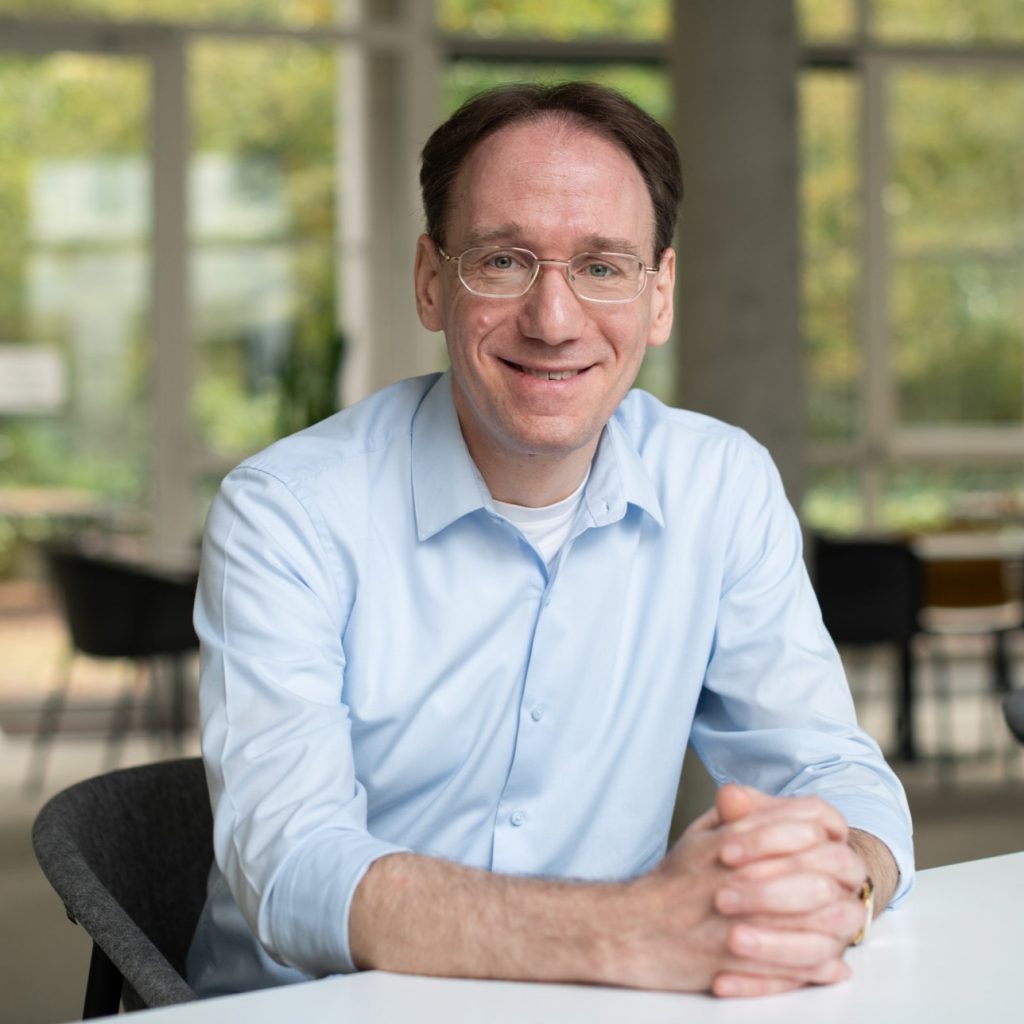
Simon Fisher’s work has revolutionized how we understand the role of genetics in language and its evolution.
| Career Stage | Roles |
| Graduate training (1991-1996) | Doctoral student at Oxford University |
| Postdoctoral researcher (1996-2002) | Postdoctoral research under Adrian Hill (Feb-Sept, 1996) and Anthony Monaco (Oct 1996-2002) at the Wellcome Trust Centre for Human Genetics (WTCHG)
|
| Independent PI (2002-2010) | Royal Society Research Fellowship, Head of Molecular Neuroscience Group at WTCHG
|
| Director (2010-present) | Director at the Max Planck Institute for Psycholinguistics |
| Professor (2012-present) | Professor of Language and Genetics at Radboud University |