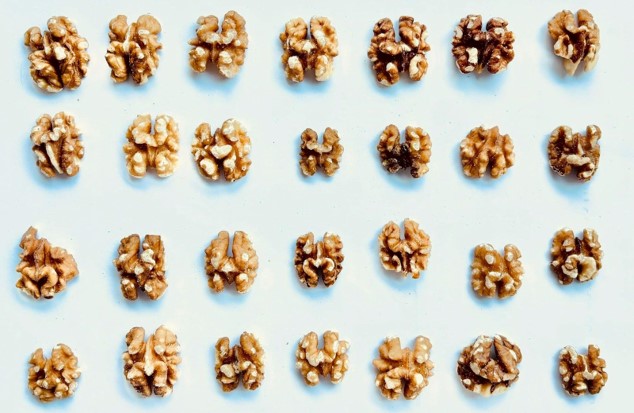
Picture two walnuts. At first, they look nearly identical. But take a closer look, and you’ll see differences in their shape, texture, and colour. Our brains are like that too. They follow a shared blueprint—folds, cells, and wiring—but the details vary from one person to the next.
More than a hundred years ago, doctors looked at brains after people died and noticed that no two had exactly the same pattern of bumps and grooves. Today, brain images show just how deep these differences go—from the tiniest building blocks to the long wires that send messages across the brain.
For a long time, scientists saw these differences as small errors—random noise that got in the way of clear data. But now, they realize this variety is actually what makes the brain so powerful and adaptable.
Take the arcuate fasciculus, a major bundle of brain wiring that’s a rock star in language research. If this bundle is damaged on the left side of the brain, it can become hard to speak or make sense of words. But here’s something surprising: some people recover faster than others. Scientists don’t fully understand why, but they’ve noticed that people who have a strong arcuate fasciculus on the right side often recover more quickly. It might act like a built-in backup system.
Once we see that every brain is a bit different, it makes sense that recovery isn’t one-size-fits-all. It opens the door to helping each person in a way that suits how their brain works best.
Recommended reading
Forkel SJ, Thiebaut de Schotten M, Dell’Acqua F, Kalra L, Murphy DG, Williams SC, Catani M. Anatomical predictors of aphasia recovery: a tractography study of bilateral perisylvian language networks. Brain. 2014 Jul;137(Pt 7):2027-39. doi: 10.1093/brain/awu113. PMID: 24951631.